



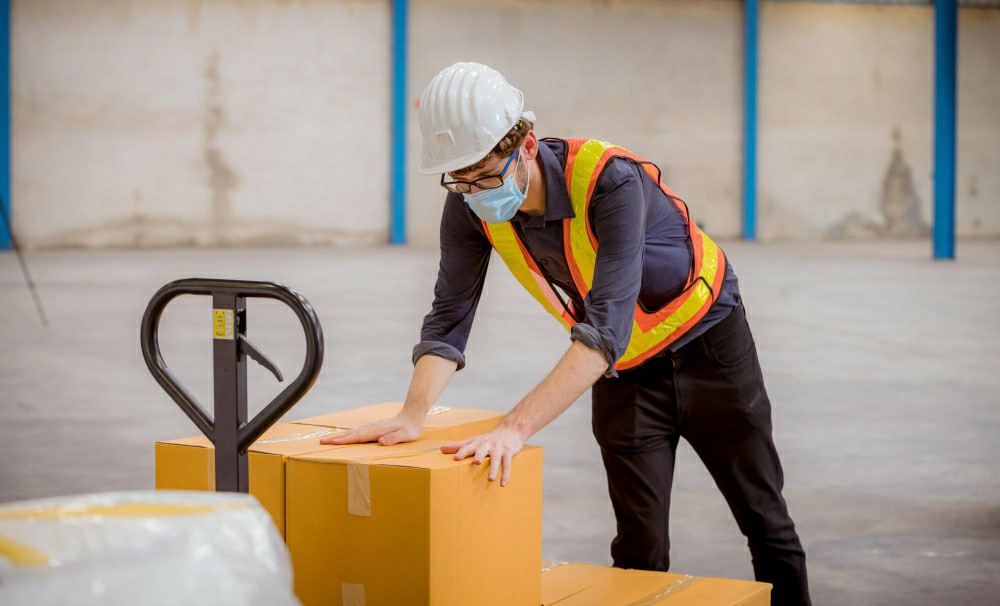
Back and upper-limb injuries from poor handling account for a huge share of lost working days across Britain every year. This guide looks at manual handling specifically for food and drink production, the tasks that cause the most harm and the controls that keep your team safe.
By the end, you will understand the avoid, assess and reduce duties behind the law, how to assess a task with TILE, and how an accredited online Manual Handling course gives your whole team the knowledge they need - with a same-day certificate.
Manual handling explained in plain English
Manual handling means any transporting or supporting of a load by hand or bodily force. That includes lifting, lowering, pushing, pulling, carrying and moving - and a load can be an object, a person or an animal. It is one of the most ordinary parts of work, and one of the most common causes of injury.
For food and drink production, that means tasks such as ingredient intake, cold-store movement and line packing and palletising. Under the Manual Handling Operations Regulations 1992 (MHOR), every UK employer must avoid hazardous manual handling where reasonably practicable, assess what cannot be avoided, and reduce the risk of injury - and that applies directly to your workplace.
The handling risks that matter most in food and drink production
Every sector has its own pressure points. In food and drink production, the tasks that cause the most injuries - and the most lost working days - tend to be the same handful of issues. Knowing them is the first step of any manual handling assessment.
- Handling sacks, crates and kegs
- Cold-store and chilled handling
- Repetitive line packing
- Wet and slippery floors
Practical controls for food and drink production
These are the points where control makes the biggest difference. If handling is left unmanaged - for example, an operative lifting a sack of flour onto a high hopper alone - the result can be a serious, sometimes permanent, injury.
| Handling risk | How to control it |
|---|---|
| Handling sacks, crates and kegs | Lift assists and conveyors |
| Cold-store and chilled handling | Splitting ingredient loads |
| Repetitive line packing | Good drainage and footwear |
| Wet and slippery floors | Rotation on repetitive tasks |
Avoid, assess, reduce: the heart of the law
the Manual Handling Operations Regulations 1992 (MHOR) is built on three simple steps that apply whether you run a food or drink production site:
- Avoid. Remove hazardous manual handling where it is reasonably practicable - can the task be redesigned, mechanised or stopped altogether?
- Assess. For handling you cannot avoid, assess the risk using TILE.
- Reduce. Put practical controls in place to cut the risk of injury so far as is reasonably practicable.
Assessing a task with TILE
TILE is the simple, memorable way to assess any handling task. Walk through each factor before the load moves:
- Task. How far is the load carried? Is there twisting, stooping, reaching or repetition in food and drink production?
- Individual. Does the person have the capability, health and training for the lift?
- Load. Is it heavy, bulky, unstable, sharp or hard to grip?
- Environment. Are floors level and clear, is there space, light and a sensible temperature, and are there steps or slopes?
Safe lifting technique, step by step
When a lift cannot be avoided or mechanised, good technique protects your back and joints. The steps are simple, but they only work if they become a habit:
- Plan the lift. Know where the load is going and clear the route first.
- Position your feet. Stand with feet apart and one leg slightly forward for balance.
- Adopt a stable posture. Bend the knees, not the back, and keep the natural curve of your spine.
- Get a secure grip. Hold the load close to your body, at waist height where you can.
- Lift smoothly. Raise with your legs, head up, and avoid twisting - move your feet to turn.
- Put it down with care. Lower with the knees and adjust position afterwards, not mid-lift.
If a load feels too heavy or awkward, stop. Split it, use an aid, or get help - no single lift is worth a long-term injury.
The UK law on manual handling
Three pieces of legislation sit behind everything here. the Health and Safety at Work etc. Act 1974 sets the overarching duty to protect health and safety. the Manual Handling Operations Regulations 1992 (MHOR) requires employers to avoid, assess and reduce hazardous manual handling. And the Management of Health and Safety at Work Regulations 1999 requires a suitable and sufficient risk assessment. The Health and Safety Executive (HSE) enforces these duties and publishes the practical guidance most workplaces follow.
Training is part of meeting these duties, but it is not the whole answer on its own. Online awareness training builds the knowledge and understanding that underpins safe handling; for higher-risk tasks it should be combined with task-specific instruction, supervision and the right equipment.
Training your team the easy way
Safe handling works when everyone understands their part. Our Manual Handling Course is CPD certified, takes around 60 to 90 minutes, and finishes with a short test and a same-day digital certificate.
It is the fastest way to bring production operatives, hygiene staff and supervisors up to a recognised standard of awareness - and because it is online and self-paced, nobody has to leave the job for a full day. You can train one person or a whole team and keep every certificate in one place as evidence.
Frequently asked questions about manual handling for food and drink production
Who needs manual handling training?
Anyone who lifts, lowers, pushes, pulls or carries loads as part of their work should understand safe handling. Supervisors and those who assess tasks benefit from a fuller understanding. Our course suits both, and you can enrol a whole team at once.
How long is a manual handling certificate valid in the UK?
There is no fixed legal expiry, but best practice and most employers treat manual handling training as valid for around three years before a refresher, or sooner after an incident or change of role.
Is manual handling training a legal requirement for food and drink production?
Where a risk of injury from manual handling exists, the Manual Handling Operations Regulations 1992 (MHOR) requires employers to provide suitable information and training. Completing an accredited online Manual Handling course is a simple, recorded way to meet that expectation for awareness and understanding.
Does online training replace practical manual handling training?
Online training builds the knowledge, awareness and legal understanding that underpins safe handling. For higher-risk, task-specific work it should be combined with hands-on instruction, supervision and the right equipment - the two work best together.
Can I do the manual handling course online?
Yes. The whole course is online and self-paced, so you can train on a phone, tablet or computer at any time, with your certificate issued the same day you pass.
Get manual handling certified today
Ready to protect your team and meet your duties? Enrol on the Manual Handling Course now, train at your own pace, and download your CPD certificate the same day. It is the simplest step you can take towards a safer, more compliant workplace.